2026-09-24
Busan Mini Facelift: Why Simply Pulling the Skin Is Not Enough
Discover why a mini facelift must reposition the underlying SMAS layer rather than just pulling the skin surface to restore a sharp, natural-looking jawline with lasting results in Busan, Korea.

Hello, this is Four Seasons Plastic Surgery Clinic.
Changes in facial contours due to aging start with subtle skin sagging and eventually lead to a loss of volume and definition along the jawline. Because of this, simple laser lifting alone may have its limitations.
A mini facelift in Busan is an effective approach that reduces the burden of extensive incisions associated with traditional full facelifts, while precisely addressing anatomical structures to improve lower facial sagging and restore skin elasticity.
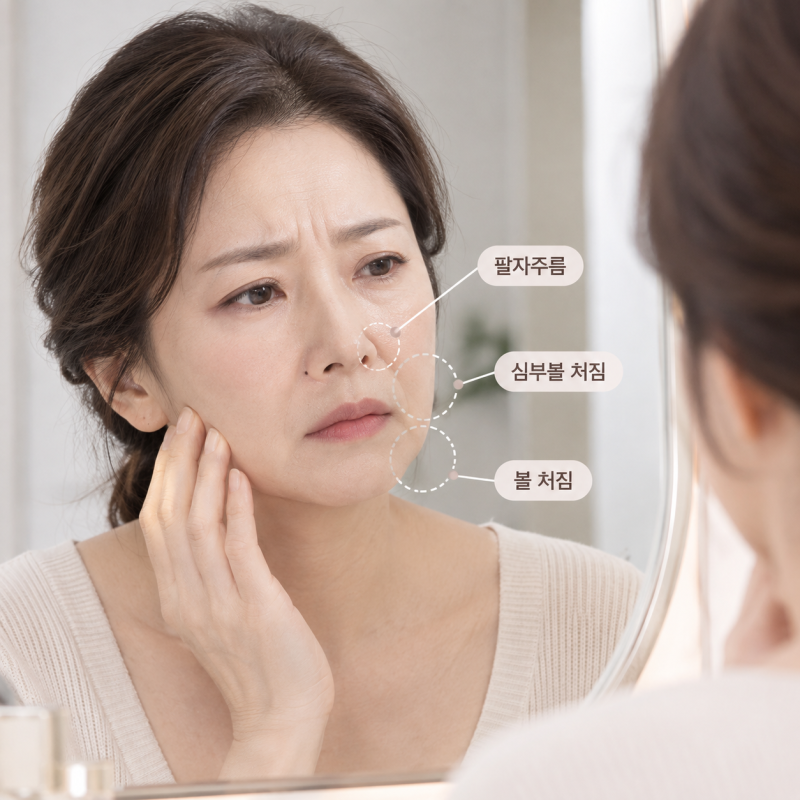
Deepening nasolabial folds, sagging buccal fat, and prominent jowls that become noticeable in the mirror are classic indicators of aging in the lower face.
These structural changes occur not only due to reduced skin elasticity, but also because the internal fat and fascia shift downward as retaining ligaments weaken over time.
For those experiencing severe sagging in the mid-to-lower face and deep buccal fat descent that non-surgical treatments can no longer resolve, a mini facelift offers an excellent surgical solution.

Cheeks that have descended with time, a blurred jawline, and deep nasolabial and marionette lines often require a targeted mini facelift rather than isolated non-invasive procedures.
A mini facelift elevates the sagging soft tissues of the mid-to-lower face, sharpening the lost contours of the jawline and noticeably softening persistent lower-face wrinkles through multidirectional lifting effects.
By restoring true structural elasticity to sagging skin and smoothly reshaping the facial contours, it creates natural volume and definition without that overstretched, unnatural look.
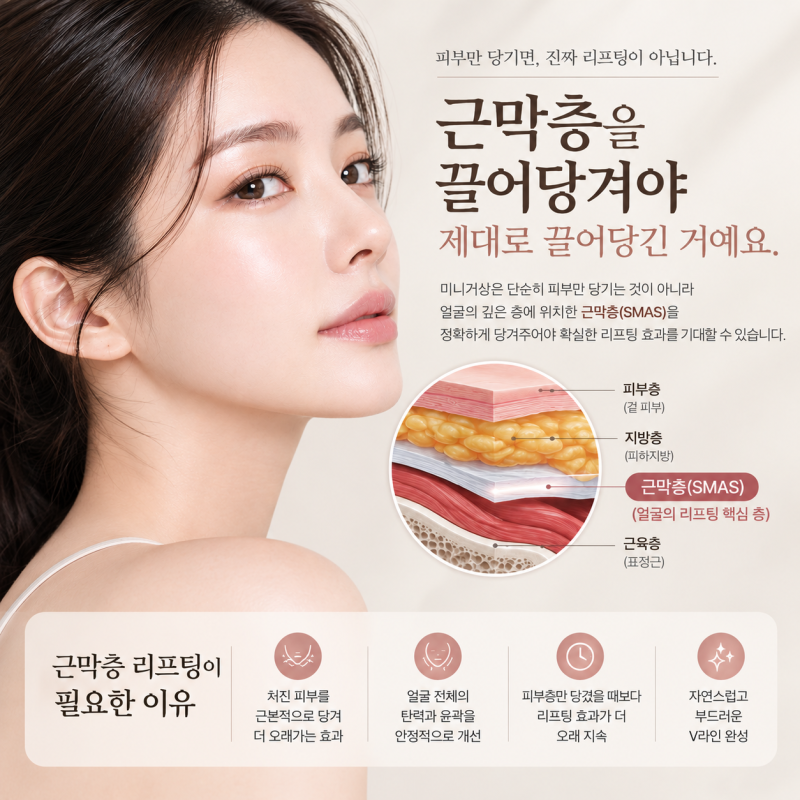
A one-dimensional technique that solely tightens and anchors the superficial skin layer cannot withstand the weight of the underlying soft tissues. This leads to premature recurrent sagging and often results in stiff, unnatural facial expressions.
The true essence of effective lifting lies in accurately dissecting the superficial muscular aponeurotic system (SMAS layer) located beneath the epidermal and dermal layers, then firmly suspending it in vertical and diagonal vectors.
Only when the SMAS layer—which acts as the structural pillar supporting both fat and superficial skin—is properly dissected and repositioned can long-lasting results and a smooth, refined V-line contour be achieved.
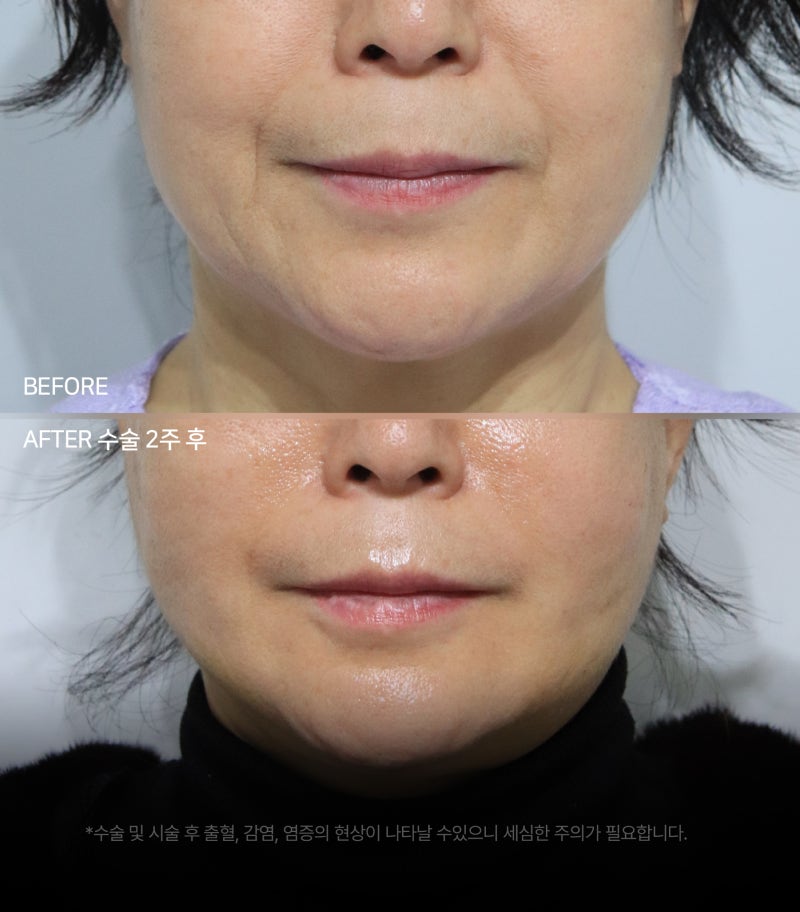
A mini facelift in Busan effectively addresses pebble chin texture (mentalis strain) and drooping corners of the mouth.
As mid-to-lower facial volume is shifted upward, a youthful, well-defined contour is naturally restored and stabilized.
However, because each individual has unique facial anatomy and skin characteristics, it is essential to consult thoroughly with highly experienced medical specialists and follow a structured recovery management plan.
If you have any questions, feel free to contact us via Naver TalkTalk!

















Frequently Asked Questions
Why shouldn’t a mini facelift just pull the surface skin?
Tensioning only the superficial skin cannot hold the weight of underlying soft tissues. It quickly leads to recurrent sagging and can cause unnatural, stiff facial expressions.
What is the most crucial layer targeted in a mini facelift?
It is the SMAS (fascial) layer located beneath the superficial skin. The SMAS layer serves as the fundamental support pillar for the overlying fat and skin. Accurately dissecting and repositioning it in vertical and diagonal directions ensures long-lasting and natural results.
Which areas can be improved with a mini facelift?
It addresses key concerns across the mid-to-lower face, such as deep nasolabial folds, sagging buccal fat, drooping jowls, marionette lines, blurred jawlines, and downturned mouth corners.
How does a mini facelift differ from a traditional full facelift?
A mini facelift significantly reduces the incision burden compared to a full facelift. By utilizing smaller, discrete incisions while still properly repositioning deeper anatomical structures, it restores lower facial definition and elasticity with less downtime.