2025-11-20
Busan Nose Surgery: How to Find Harmonious Facial Proportions by Improving a Low Nasal Bridge and Hump Nose
Discover how winter's ideal conditions make it a popular time for nose surgery in Busan. Learn about common concerns like low nasal bridges and hump noses, and how personalized approaches can achieve balanced, natural-looking results.


Winter is a time when swelling management is easier and sunlight is not as strong, leading to a significant increase in demand for nose surgery among all clients, including students and office workers. With the end of the year and the new year approaching, many look forward to a change in impression, image improvement, and preparation for the new semester! This is because the nose is an important body part that determines one's overall impression.
For these reasons, the demand for nose surgery to improve one's impression is rising, with many considering nose surgery at clinics known for excellent Busan nose surgery.
At clinics specializing in Busan nose surgery, the most frequently consulted types of rhinoplasty are a low nasal bridge, a hump nose where the bridge appears raised, and complex nose shapes accompanied by a drooping nasal tip. While there are various other forms, these types of noses require a comprehensive design approach that considers not only the height of the nasal bridge but also the overall facial proportions, individual facial bone structure, skin thickness, and nasal bridge width.
A low nasal bridge can make the face appear to lack overall dimension, or the bridge might look wide, making the face seem broader and flatter. To improve this, it is necessary to add appropriate height and volume to the nasal bridge to compensate for the lack of volume.
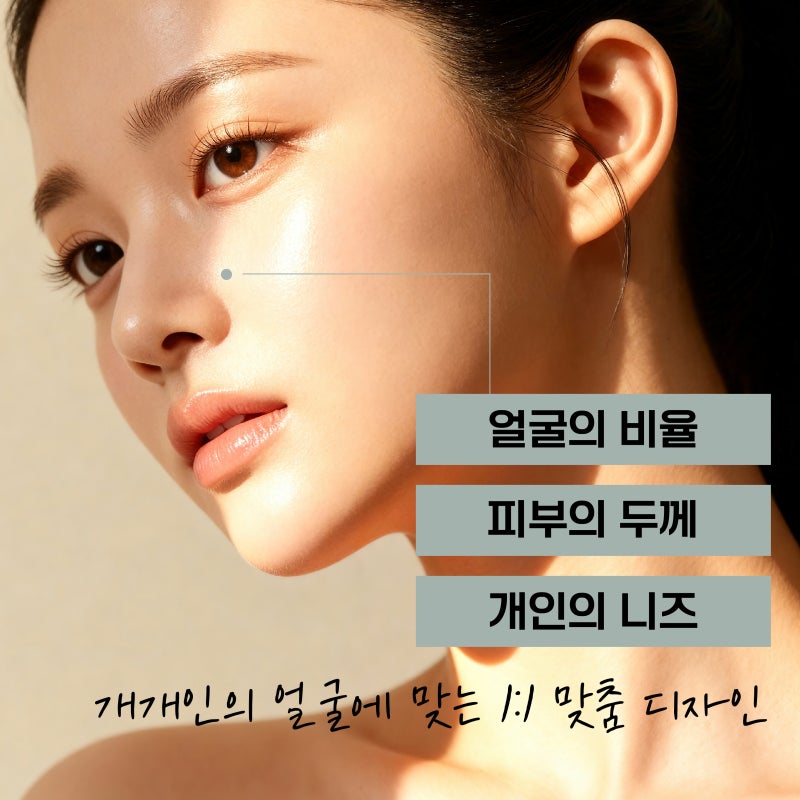
Correcting a low nasal bridge requires designing a line by focusing on the connection with the nasal tip. Therefore, it is crucial to go beyond simply raising the bridge and instead design a harmonious line that matches one's facial proportions. Considering the width of the face and the distance between the eyebrows together, an approach that balances both the front and side views can lead to more natural results from Busan nose surgery.
A hump nose, which is more prominent from the side than the front, can also give a sharp impression because the center of the nasal bridge protrudes and the nasal tip appears to drop sharply downwards. For those who prefer a softer impression, a hump nose often becomes a concern they wish to correct. Hump correction requires a process of designing the structure so that the nasal tip can naturally lift while refining the protruding part. In particular, individual diagnosis is important because the necessity of osteotomy varies depending on the degree of the hump.
If the procedure is performed by excessively raising the nasal bridge and tip, there is a possibility of side effects such as mismatched skin tension or the implant showing through. Therefore, it is crucial to proceed with Busan nose surgery in a way that best suits one's condition.
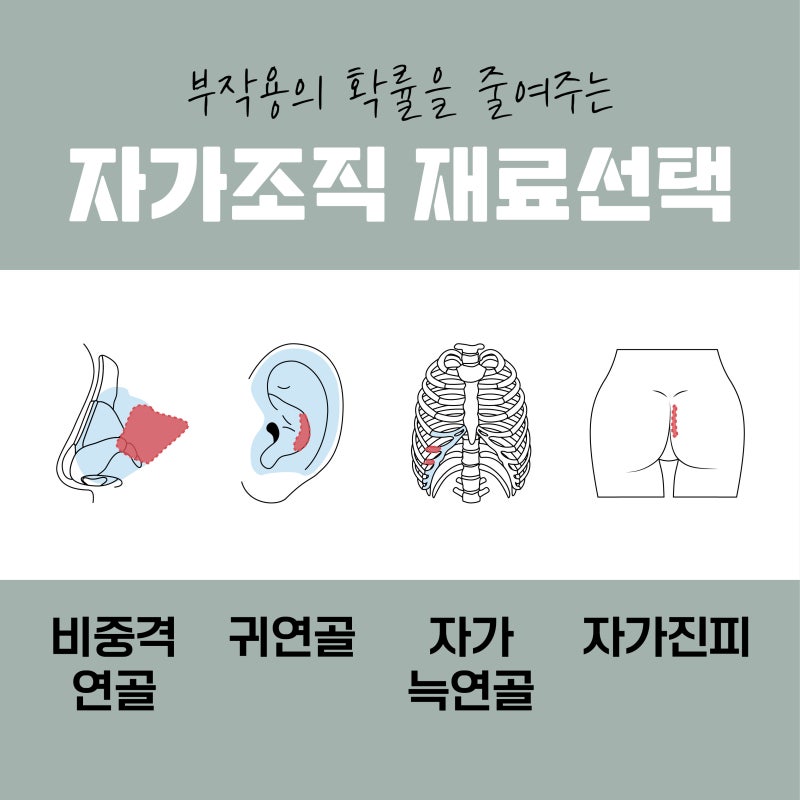
When considering surgery, clinics specializing in Busan nose surgery can suggest the direction for selecting materials to be used. In nose surgery, autologous tissue materials, utilizing one's own cartilage or dermis, are frequently used. This is often preferred for natural results and reduced side effects. Since each material has different characteristics and application areas, it is important to choose according to one's individual condition.
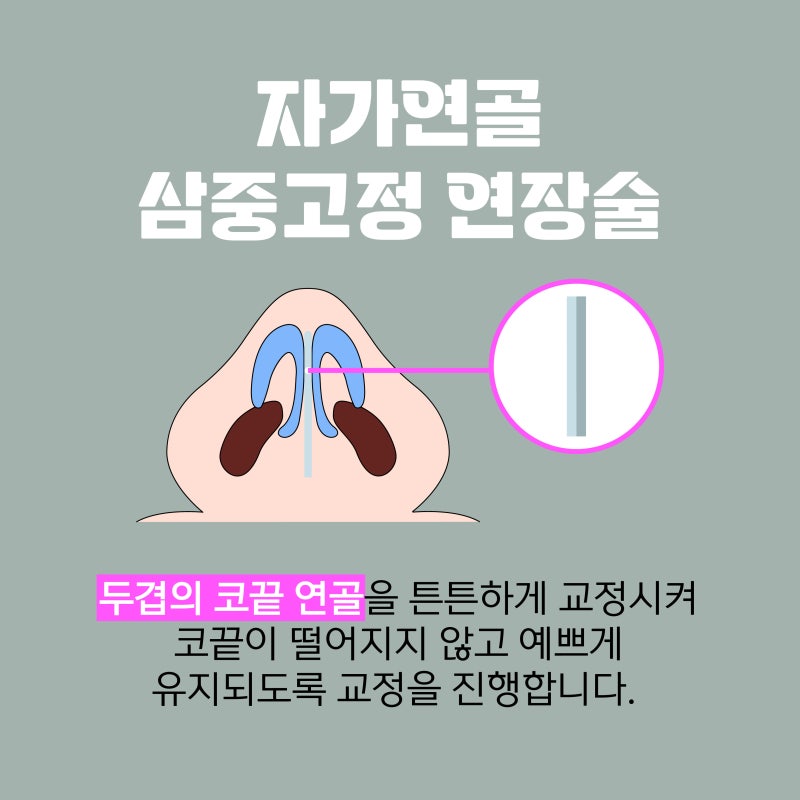
What are the main autologous tissue materials used in nose surgery? Ear cartilage, which can be harvested from the ear, is used to refine or augment the shape of the nasal tip. Septal cartilage, harvested from inside the nose, has good strength and straightness, and is sometimes used to raise the nasal tip or as a supporting structure for the columella.
Autologous costal cartilage has high strength and is often used in revision surgeries or cases requiring structural reconstruction, but a professional refining process is essential to prevent warping. Autologous dermis, which involves harvesting dermal tissue from the skin layer rather than cartilage, is suitable for those who desire a natural look and are concerned about thin skin showing through. However, the amount absorbed over time can be greater than with cartilage. Nevertheless, it is suitable for those who prioritize naturalness. A consultation is necessary to select the appropriate material based on one's desired aesthetic and nasal condition.

As the nose, located at the center of the face, becomes more defined, the side profile can appear cleaner and more refined. A strong impression caused by a hump can soften, and the angle of a drooping nasal tip improves. These improved areas naturally align with the overall facial proportions, and many people notice a clear difference, especially in their side profile, after correcting a low nasal bridge and hump. Since it is not merely a surgery to change height, it can redefine the central proportions of the face and create dimension, enhancing aesthetic satisfaction.
Many people are already preparing for changes this winter season, and as customized designs that align with current trends are preferred, a personalized approach that considers not only the shape of the nose but also the overall balance is helpful. All surgeries should be based on one's own choice, so we hope you achieve satisfactory results through careful decision-making after consultation.