2025-10-10
Considering Functional Rhinoplasty for Rhinitis Symptoms Due to Seasonal Changes
As the seasons change, rhinitis symptoms can worsen. Functional rhinoplasty can address both internal structural issues causing rhinitis and aesthetic concerns, improving breathing and appearance. A precise diagnosis with 3D-CT is crucial for personalized treatment.


Considering Functional Rhinoplasty for Rhinitis Symptoms Due to Seasonal Changes

As the long, sweltering heat subsides,
the dry season of transitional weather returns.
We begin to feel the change in weather,
and sometimes our bodies are the first to notice.
This is due to the fluctuating temperatures caused by daily temperature swings
and the dry air,
making breathing difficult and signaling a change in weather.
There are various causes of rhinitis, but chronic rhinitis or
structural problems within the nose can also
lead to discomfort. Problems that originate internally
can become chronic rhinitis symptoms if prolonged,
leading some to mistake them for a common cold
and delay treatment. To improve seasonal rhinitis that impairs quality of life,
many consider rhinitis nose surgery or
functional rhinoplasty.
Functional rhinoplasty is a method that can improve internal problems, such as rhinitis,
while also addressing aesthetic concerns.
While there are limitations to identifying detailed internal issues from the outside,
a precise examination is necessary because external problems,
such as a deviated nasal bridge due to trauma,
can also cause issues.
By improving these internal problems,
aesthetic concerns like a prominent hooked nose, bulbous nose,
or droopy nose can also be improved with functional rhinoplasty.
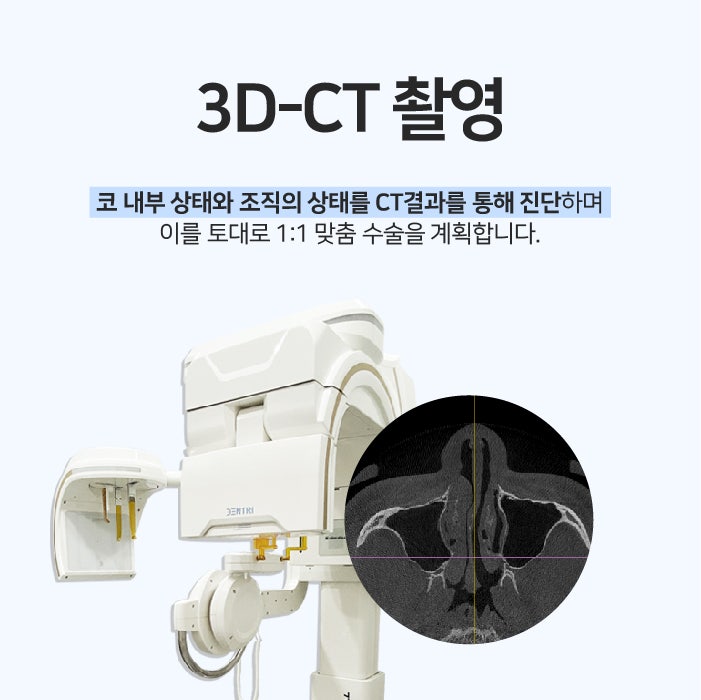
If you are considering functional rhinoplasty, it is important to understand the exact
condition of the inside of your nose and the state of the tissues
to identify the precise cause.
A 3D-CT scan allows for a professional diagnosis and a customized surgical plan,
so functional rhinoplasty can proceed after a 3D-CT scan.
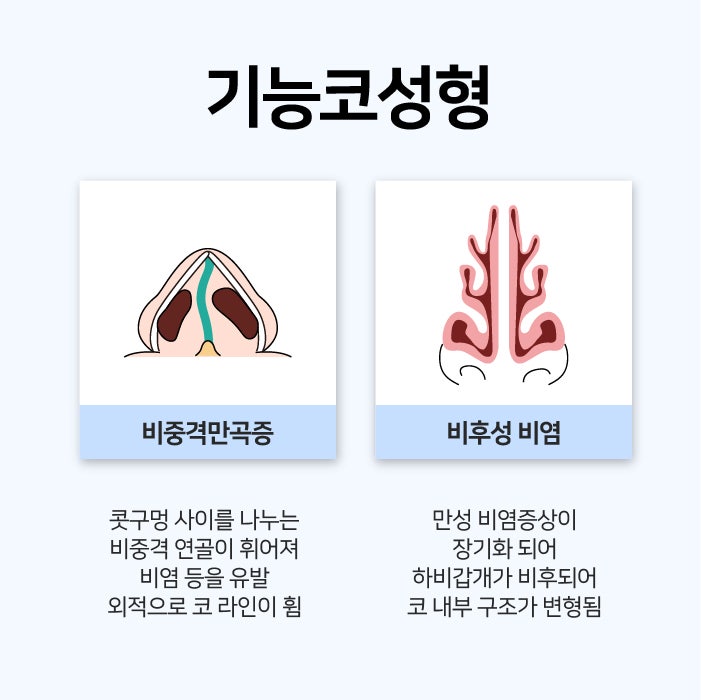
Diseases of the internal nasal structure that are covered by private health insurance include
deviated septum and hypertrophic rhinitis.
A deviated septum refers to a condition where the nasal septum,
a thin structure of bone and cartilage that divides the nose into left and right sides,
is displaced or bent to one side due to trauma or congenital causes.
Symptoms include difficulty breathing through one or both nostrils,
leading to poor airflow and sometimes headaches.
Resistance to breathing can reduce sleep quality,
irritate the mucous membranes, and worsen inflammation.
In mild cases, medication may be prescribed, but if the internal nasal
structural deviation is severe, surgical correction is necessary.
Hypertrophic rhinitis refers to a condition where the inferior turbinates,
which are mucosal structures inside the nose, become thickened and swollen due to inflammation.
It often accompanies a deviated septum.
Treating only one condition can lead to recurrence of symptoms,
so it is best to get a diagnosis and undergo combined treatment.
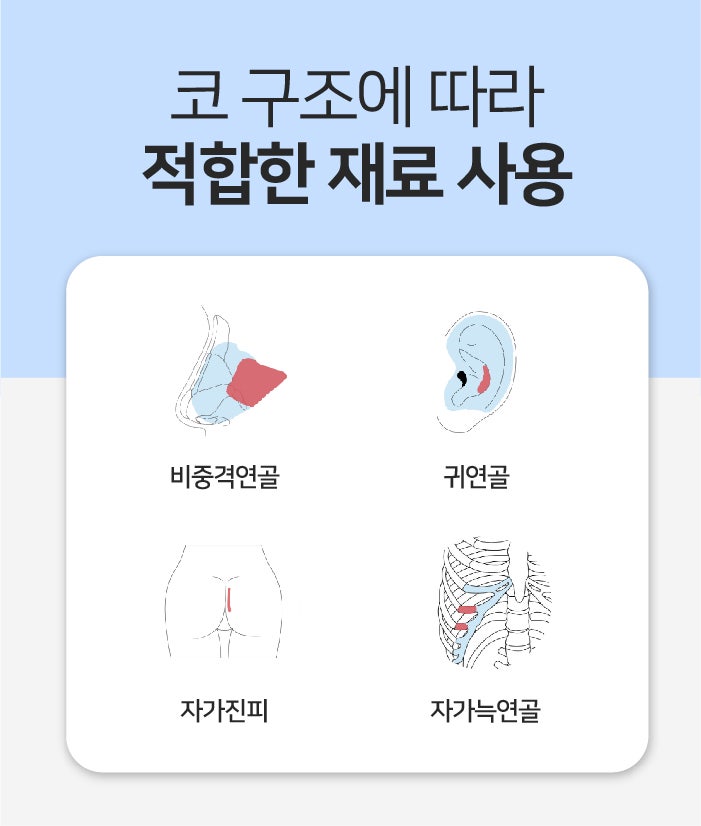
Since each person's nasal condition and structure are different,
there are also options for material selection.
Therefore, it is best to choose appropriate materials
for the surgery. Using autologous tissue instead of artificial implants
has the advantages of less foreign body sensation and a natural result.
Harvestable areas include the septal cartilage next to the nose,
ear cartilage, costal cartilage (autologous rib cartilage),
and autologous dermis from the hip area.
Surgery can be performed using these materials.
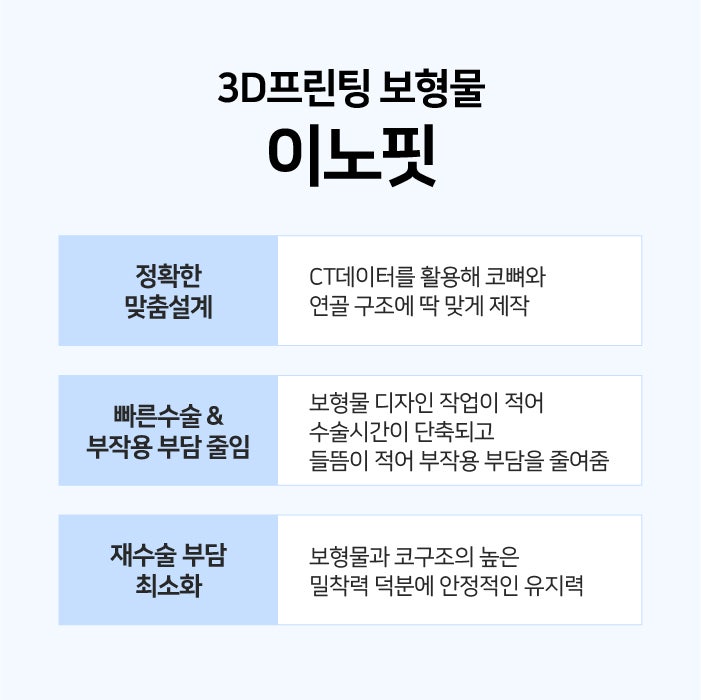
Another method is InnoFit rhinoplasty using 3D printing,
which utilizes 3D printing technology to create customized implants for patients.
After precisely analyzing the nasal bone and cartilage structure using 3D-CT scan data,
an implant is produced to match the shape of the nose and cartilage structure.
This customized production ensures high adhesion and stable retention,
and less implant design work shortens surgery time,
reducing the burden of side effects. This method has the advantage of better
suitability for the patient and creating more natural lines than standard implants.

For functional rhinoplasty, which aims for both functional and aesthetic improvement,
it is crucial to undergo detailed examinations through a specialist's diagnosis
for a precise inspection of the internal nasal structure. To provide proper treatment,
it is important to identify the root cause of the problem,
so performing the surgery safely is essential.
Functional rhinoplasty is possible for both primary and revision surgeries, but prices vary,
so it is best to consult with a specialist for a 1:1 customized improvement before making a decision.