2025-03-31
Various Types and Surgical Methods of Busan Lifting
Explore the diverse range of lifting procedures available in Busan, from non-incisional laser and thread lifts to surgical methods. Understand how to choose the right treatment for your specific needs and concerns, considering factors like aging, skin elasticity, and facial contours.

Various Types and Surgical Methods of Busan Lifting

There is a wide variety of lifting procedures available in Busan. From non-incisional methods using lasers or threads to surgical procedures involving incisions, the options are diverse in terms of areas treated and techniques used. Many people wonder which method would be best for them and which might have fewer side effects. While all procedures and surgeries can have side effects such as swelling, inflammation, bleeding, and pain, which one is most suitable for you? Let's explore the various types of lifting procedures, their methods, and how to decide which one is right for you.
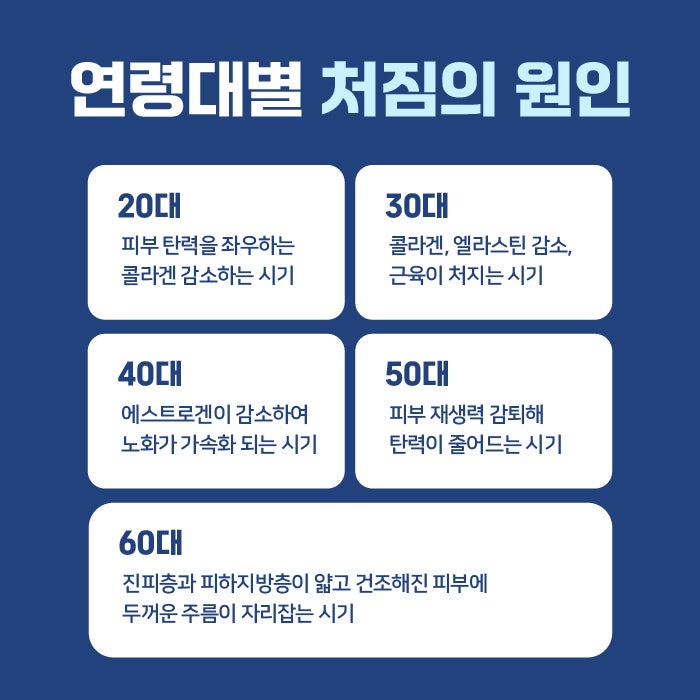
Aging is said to begin after the growth of tissues has completed. After the skeletal growth of bones and muscles finishes, elasticity decreases, and sagging begins. How you manage your skin can either slow down or accelerate the aging process, so proper care during and after growth is key to delaying its onset. In your 20s, skin elasticity gradually starts to decline; in your 30s, muscles begin to sag; and in your 40s, hormonal changes accelerate aging. By your 50s, regenerative capacity decreases, leading to an overall loss of skin elasticity, and from your 60s onwards, fine lines turn into deeper wrinkles, becoming more established. As skin ages, it becomes drier, creating an environment conducive to wrinkles. Therefore, it's crucial to focus not only on elasticity and sagging but also on moisturizing, as dry skin tends to shrivel.
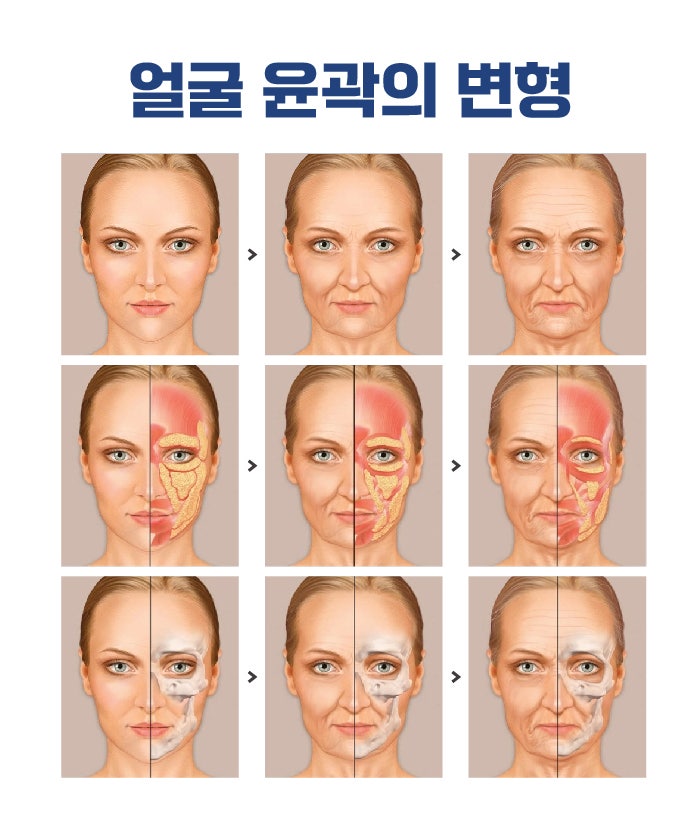
As such, Busan lifting is not merely a procedure for sagging skin. As shown in the photo above, while the skin visibly sags and loses elasticity, aging also progresses internally. Muscle sagging, fat reduction, and bone thinning are all part of the aging process. Aging is not just about wrinkles; it encompasses the forehead and eyebrows drooping, eyelids covering the eyes, the mid-face gradually lengthening, nasolabial folds deepening, the jawline collapsing, and neck wrinkles becoming more pronounced. This leads to an overall change in facial contours.
Sagging can occur due to skin, fat, or edema. Skin wrinkles are caused by muscle sagging and the many facial expressions made throughout life. Fat sagging can result from weight gain and an increase in fat volume, leading to heaviness, but it can also occur when fat fills spaces created by thinning bones, causing those areas to bulge and sag. Examples include sagging cheekbones deepening nasolabial folds or the appearance of 'jowls' around the mouth. Sagging can also happen due to the accumulation of unnecessary fluid from edema.
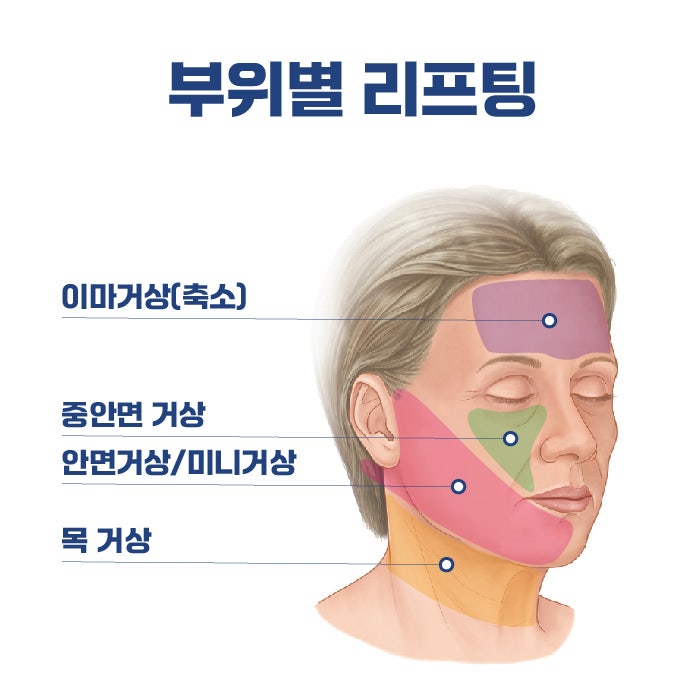
There are various methods for Busan lifting depending on the area. Forehead lift or forehead reduction surgery is not simply for a sagging forehead but rather for the entire upper face. When the forehead, eyebrows, and eyelids sag together, causing the forehead to widen, the space between the eyebrows and eyes to narrow, and the eyelids to cover the pupils, a forehead lift can improve this. If the forehead is wide and you wish to reduce its width, forehead reduction surgery can be performed simultaneously with improving sagging eyebrows and eyelids.
For overall facial sagging, a mid-face lift, full facelift, or neck lift can be performed. If sagging is not severe but a more distinct improvement than a thread lift is desired, a mini-facelift can be helpful. For sagging cheekbones, methods to lift the mid-face should be considered, while for sagging cheeks and jawline, appropriate surgical methods should be explored. It is said that we are born with two lines on our neck. These lines become more prominent with age as neck wrinkles deepen. Like all wrinkles, neck wrinkles are particularly difficult to improve with non-surgical treatments, so it's important to manage them from a young age. They can be improved by combining a facelift with a neck lift.
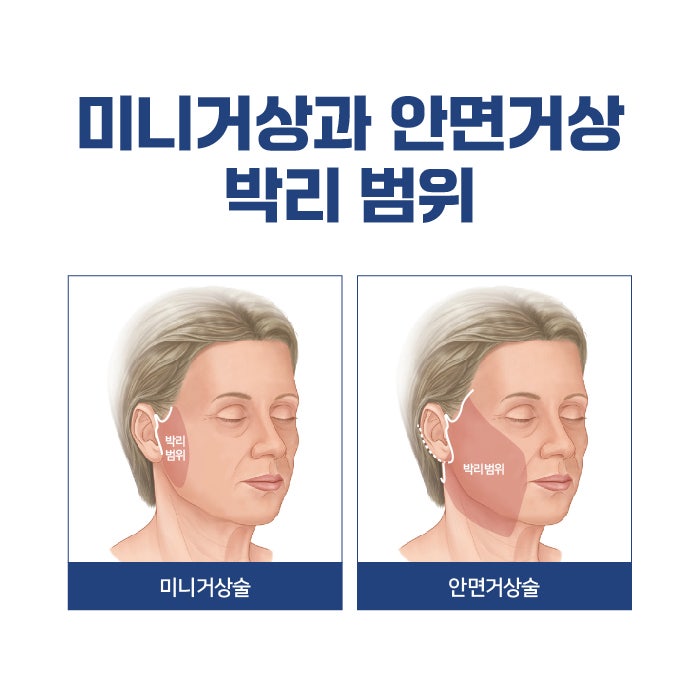
The biggest difference between a mini-facelift and a full facelift lies in the incision and dissection areas. A full facelift not only lifts facial sagging but also improves neck sagging. Although it involves more incisions, it is a highly effective surgery for addressing the fundamental issues of sagging, offering significant improvement potential. Since it requires lifting not just the skin but also the muscles and SMAS layer, the surgery time is longer, and consequently, the recovery period can also be extended. A mini-facelift involves smaller incision and dissection areas and is suitable for cases where sagging is not extensive enough for a full facelift but a thread lift would not be effective. Because the dissection area in a mini-facelift is not wide, the lifting effect has limitations. Therefore, if you only consider the cost, you might not achieve the desired results. It is best to consult with medical staff to determine if it is the right surgery for you.
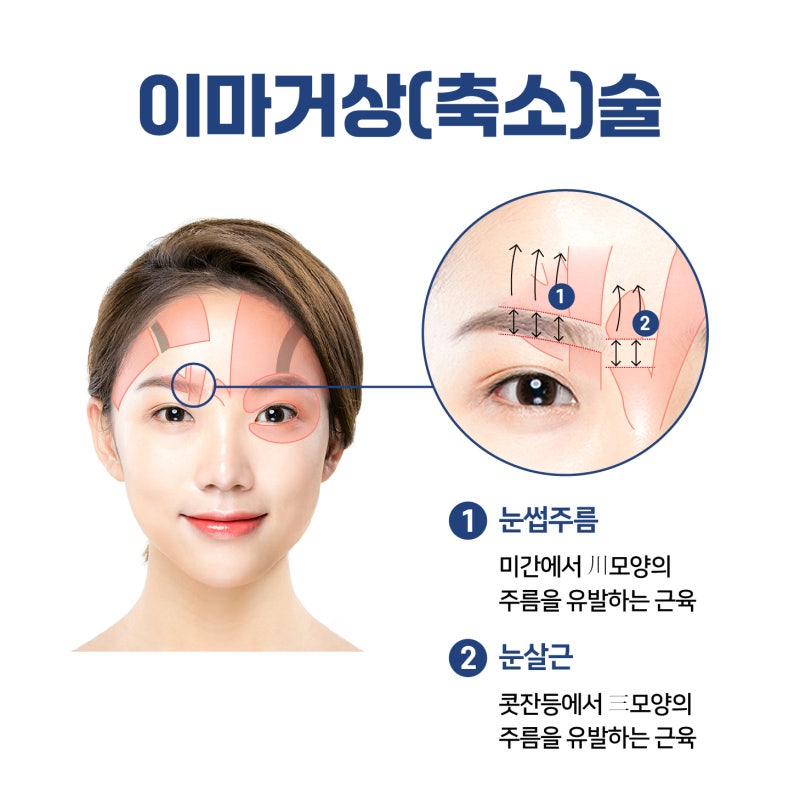
While the surgical methods for a forehead lift and an eyebrow lift are different, a forehead lift can also achieve the effects of an eyebrow lift. An endoscopic forehead lift involves a wide dissection area, which lifts the eyebrows and also provides a lifting effect for sagging eyelids. As we age, the space between the eyebrows and eyes narrows, making the eyes appear tired; a forehead lift can make the eyes look more open and brighten the overall impression. Additionally, wrinkles on the glabella and bridge of the nose can also be improved, resulting in a more youthful appearance. Since incisions are made within the hairline, scars are often less visible or not exposed. For forehead reduction surgery, a zigzag incision is made along the hairline, requiring careful scar management.
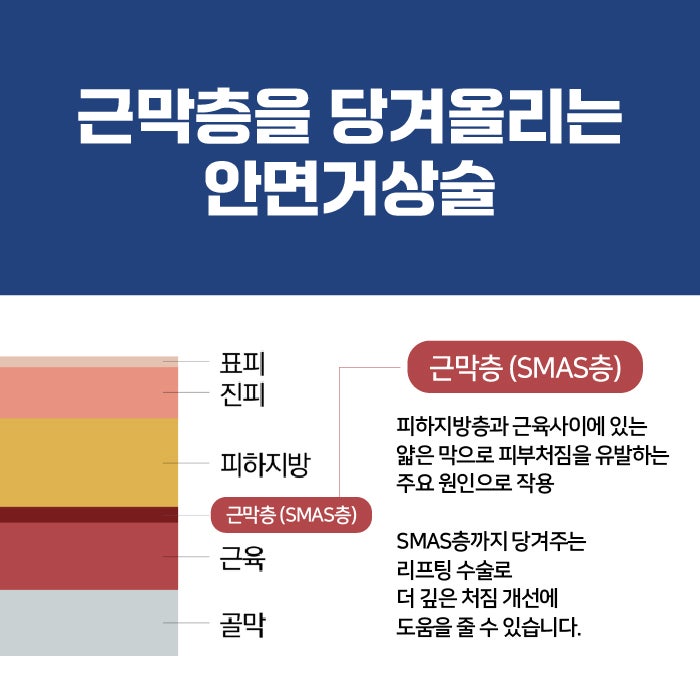
Busan lifting methods are broadly divided into surgical and non-surgical approaches. Surgical lifting is effective when it involves pulling up the fascial layer, which causes skin sagging. Non-surgical methods include thread lifts and laser treatments. These two methods are often used for preventative care before significant skin sagging occurs, or to maintain the effects after a surgical lift. Consistent use can slow down the rate of sagging compared to individuals of the same age and skin type. Sagging does not occur in just one area; it's an overall collapse. Therefore, it's best to accurately identify the cause of sagging before deciding on a treatment method.
There are various types of threads, broadly categorized into absorbable and non-absorbable threads. The components of threads include collagen or substances that induce collagen production. Thread lifting not only provides a lifting effect but, depending on the thread's material, can also improve skin texture by generating collagen in the surrounding area. If the face is heavy due to a lot of fat, thread lifting alone might not be sufficient. In such cases, it may be combined with other surgeries to reduce the weight before performing a thread lift.
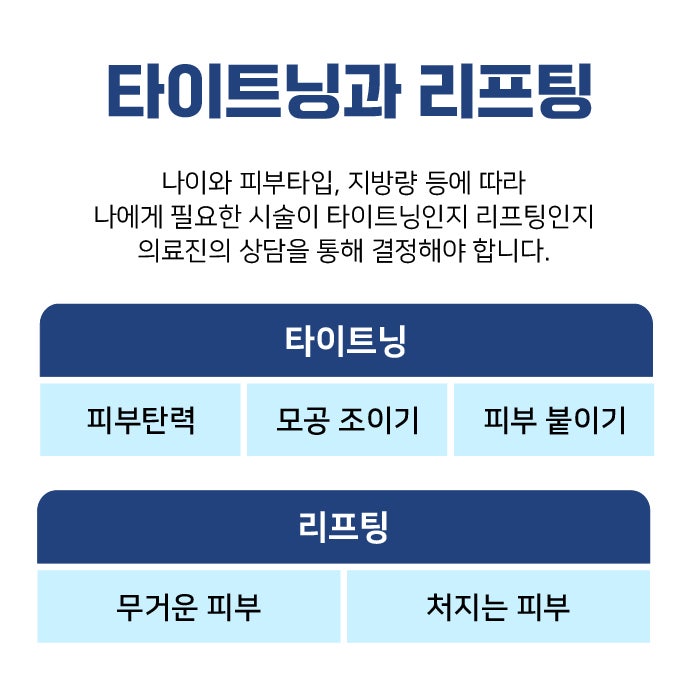
There are also various types of lasers, but the most common and effective ones are radiofrequency (RF) and ultrasound. Divided by frequency, they offer benefits such as improving skin elasticity, tightening pores, lifting effects, and refining facial contours. It is advisable to consult with medical staff to determine whether your skin needs lifting or elasticity improvement, and then decide on the appropriate treatment for you.
The effects of procedures and surgeries can vary depending on an individual's skin condition, age, and tissue structure.
Please make an informed decision about the most suitable method for you through accurate diagnosis and consultation.
※ This content provides general information about skin and aging phenomena.
Accurate diagnosis and treatment plans should be made through individual consultation with medical staff.
Treatment results may vary from person to person.