2026-02-02
What are the key factors determining the outcome of eye surgery?
The eyes are a crucial element that shapes one's impression. Eye surgery is not just about creating ‘double eyelids’ but a comprehensive design process considering the individual's eye structure, muscles, and skin condition.
What are the key factors determining the outcome of eye surgery?

Hello, this is Four Seasons Plastic Surgery.
The eyes are the first part of the face that people notice and are a key factor in shaping one's impression.
Even with the same face shape, the eyes can appear clear or, conversely, tired and older, depending on the eye shape. Therefore, eye surgery is not simply about creating ‘double eyelids’ but rather a process of comprehensively considering the individual's eye structure, muscles, and skin condition to design the overall eye shape.
When considering eye surgery, the most common questions and crucial surgical methods are the differences between non-incisional (suture) and incisional methods. It is also important to understand the types of double eyelid lines that harmonize well with one's face, and whether ptosis correction is needed to maintain a clear eye shape. Understanding each of these accurately can lead to highly satisfying results, so it is advisable to learn about them.
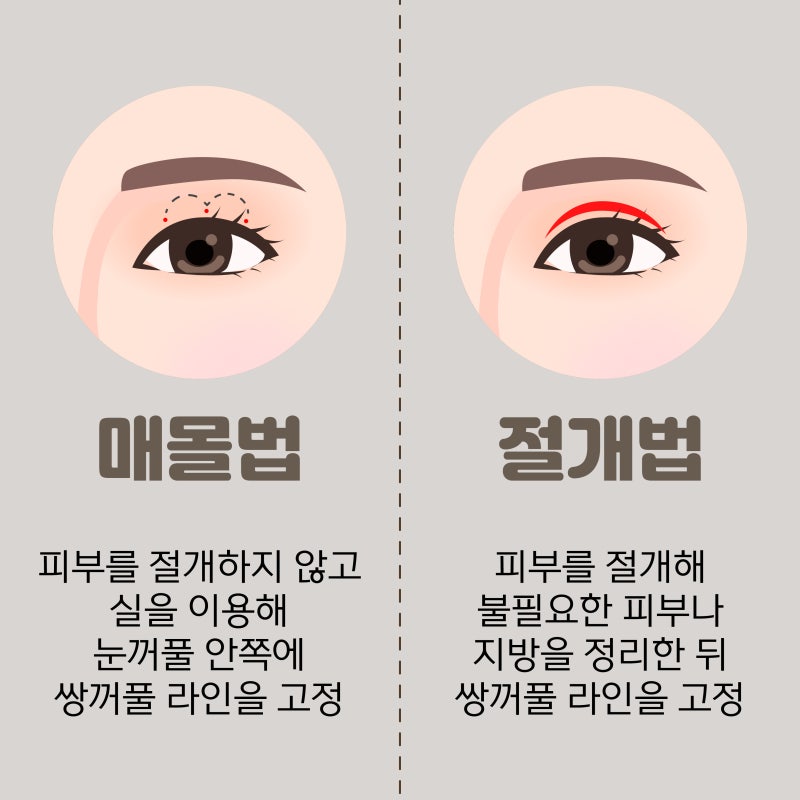
Non-incisional double eyelid surgery is a method that fixes the double eyelid line on the inside of the eyelid using sutures without incising the skin. It is suitable for cases with minimal skin sagging, relatively thin eyelids, and no excessive fat, with less concern about scarring. Since the skin is not incised, recovery is fast. However, if the eyelid skin is thick or there is a lot of fat, the line may be difficult to maintain with the non-incisional method. Therefore, the surgical method must be decided based on the individual's eye condition. This method is also applicable if the eyelids have sagged due to repeated use of double eyelid tape or glue, or excessive irritation.
Incisional double eyelid surgery involves incising the sagging skin, removing unnecessary skin or fat, and then fixing the line. It is applicable even in cases of skin sagging or excessive fat in the upper eyelids, which means the line is relatively stable and well-maintained. Since unnecessary skin is removed, it is suitable for cases where the eyelids have sagged due to repeated use of double eyelid tape and glue. Incisional methods are also often chosen for revision surgeries, and since the incision range and design vary depending on the individual's eye condition, it is important to establish a surgical plan and proceed accordingly.
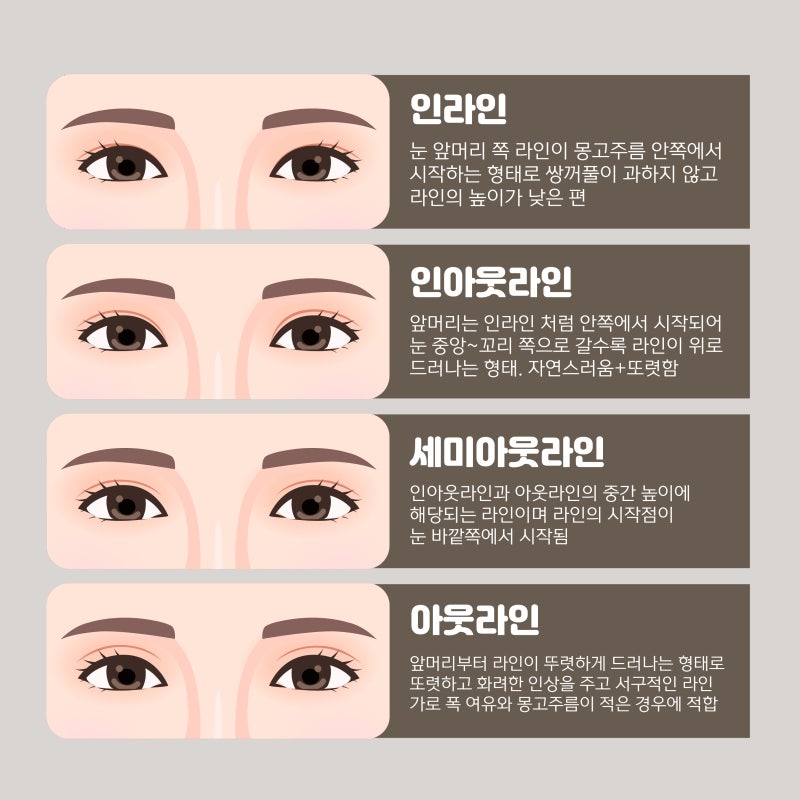
For double eyelids, it’s not about whether you have them or not, but what kind of line design you have. This is because the suitable and possible line is determined by the horizontal and vertical length of the eye, the direction of the outer corner of the eye, and the presence or absence of epicanthal folds.
The in-line double eyelid has a line that naturally hides inside the skin at the inner corner of the eye, then extends into a calm, low line without being excessive. This is often chosen by those who prefer a natural eye shape. The in-out line starts close to the in-line at the inner corner but becomes more visible towards the center, designed for those who want both naturalness and clarity. The semi-out line double eyelid is more visible than the in-out line, yet not excessive, and is currently one of the most preferred lines. The out-line has a distinct line visible from the inner corner, giving a glamorous impression. It is suitable for those with sufficient horizontal eye width, minimal epicanthal folds, and ample space between the eyebrows and eyes.

While meeting trends and needs for double eyelid lines is important for personal satisfaction, choosing a design that matches your individual eye structure and facial proportions is most crucial. Therefore, another issue to consider during eye surgery is ptosis correction. In some cases, double eyelid surgery alone can make blurry lines clear and eyes more defined, but if the strength to open the eyes is weak, ptosis correction must be performed together.
Ptosis correction is a surgical method that adjusts the strength of the levator palpebrae superioris muscle, which opens the eyes, to help the eyes open more clearly. If you struggle to open your eyes, habitually use your forehead muscles to open them, or if your eyes still look sleepy and not refreshed even after double eyelid surgery, there are limitations to overall impression improvement without concurrent ptosis correction. Conversely, it is also important to avoid excessive ptosis correction, so you should receive an accurate diagnosis.
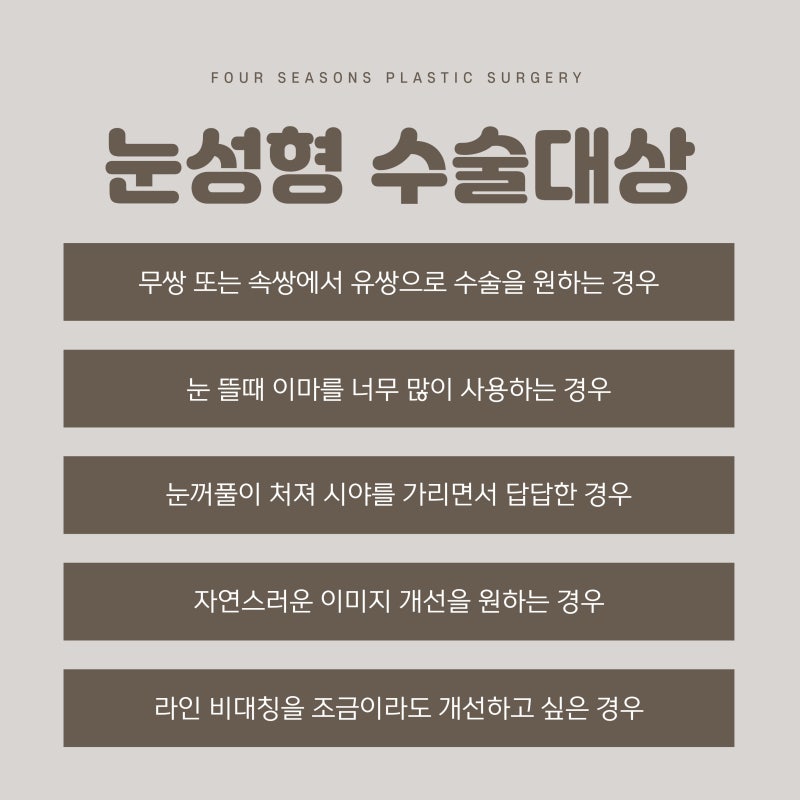
Ultimately, the most important thing in eye surgery is making the right choice for you, the client. Rather than simply choosing a surgical method, it should be approached comprehensively. Therefore, instead of following trends, it is most important to create a surgical plan that suits your eye condition. We recommend proceeding with thorough consultation and diagnosis, where the direction is determined by your choice, not the medical staff's.
If you are considering eye surgery, rather than thinking ‘which surgery is better’ or ‘which line is prettiest,’ please approach it based on ‘what surgery do I need?’