2026-10-27
Busan Ulthera-Thermage: Why Ultrasound and Radiofrequency Reach Different Depths in the Skin
Explains how Ulthera focuses ultrasound at set depths while Thermage heats the dermis with radiofrequency, and how the choice between them or both depends on where sagging begins.
Have a question? Message us on Naver TalkTalk!

Hello, this is Four Seasons Plastic Surgery Clinic. ^^
When you consult about sagging or fine lines, you will often hear the term "Busan Ulthera-Thermage." It refers to a combined lifting treatment that uses both Ulthera and Thermage.
Both devices are popular choices for sagging and fine lines, but they work in different ways. Ulthera focuses ultrasound at a set depth beneath the skin, while Thermage uses radiofrequency to heat the dermis across a broad area.
Today, I'd like to explain where and how each device works within the skin, and the criteria for deciding whether to use one or both. ^^

Sagging and fine lines may not be limited to just one layer of skin.
From the surface down, skin consists of the epidermis, dermis, and subcutaneous fat. Beneath these layers lies the SMAS (superficial musculoaponeurotic system), a fibrous membrane that connects the facial muscles to the skin. The SMAS is also known as the layer addressed in facelift surgery.
The sagging and fine lines we notice with age may relate to changes in the dermis just beneath the epidermis, or they may appear alongside changes in deeper layers. So even when concerns look similar, the devices considered can differ depending on the depth at which the change began.
That depth is exactly where Ulthera and Thermage diverge.
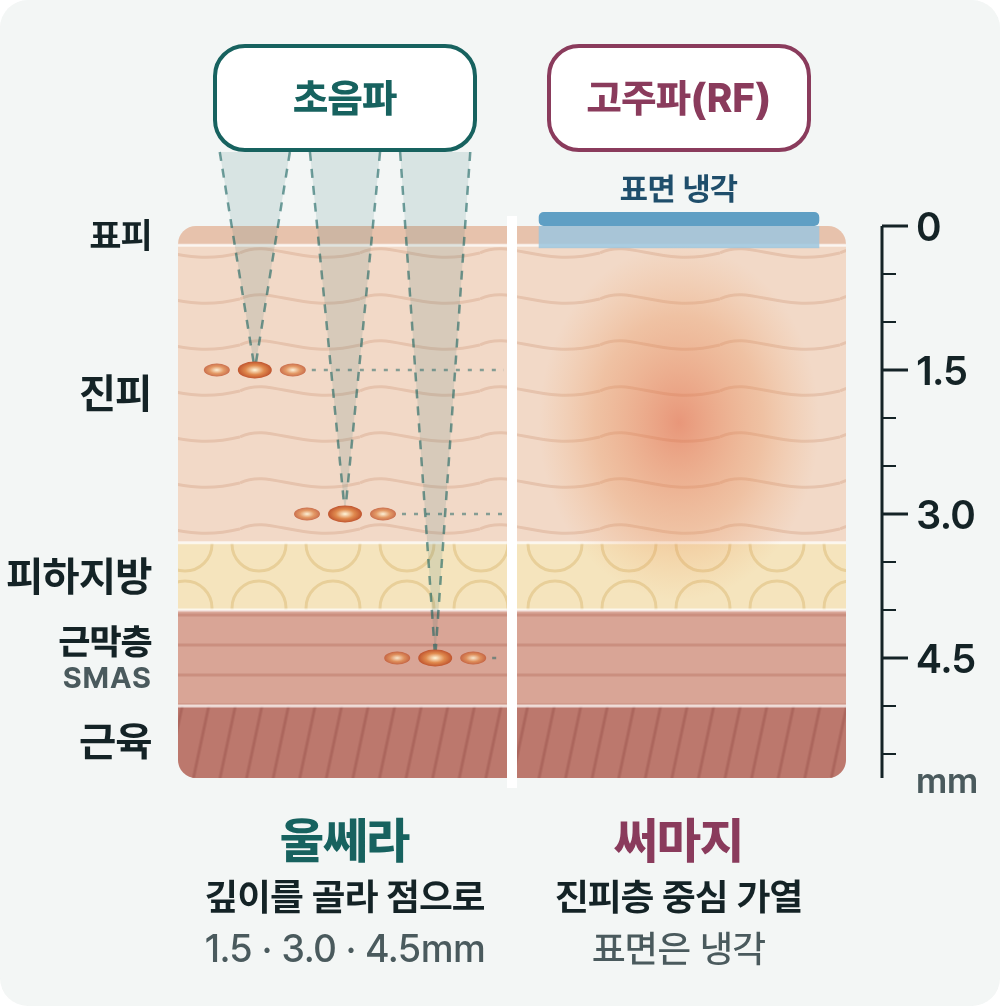
Ulthera focuses ultrasound onto one point.
Much like a magnifying glass concentrates sunlight onto a single point, Ulthera focuses ultrasound onto one point beneath the skin (focusing) and heats tissue only at that spot. At the focal point, the temperature momentarily rises to 60°C or higher, creating a tiny thermal coagulation point of less than 1 mm³. The surrounding tissue and the skin surface are not at the focal point, so the energy is reported to pass through them in a dispersed state.
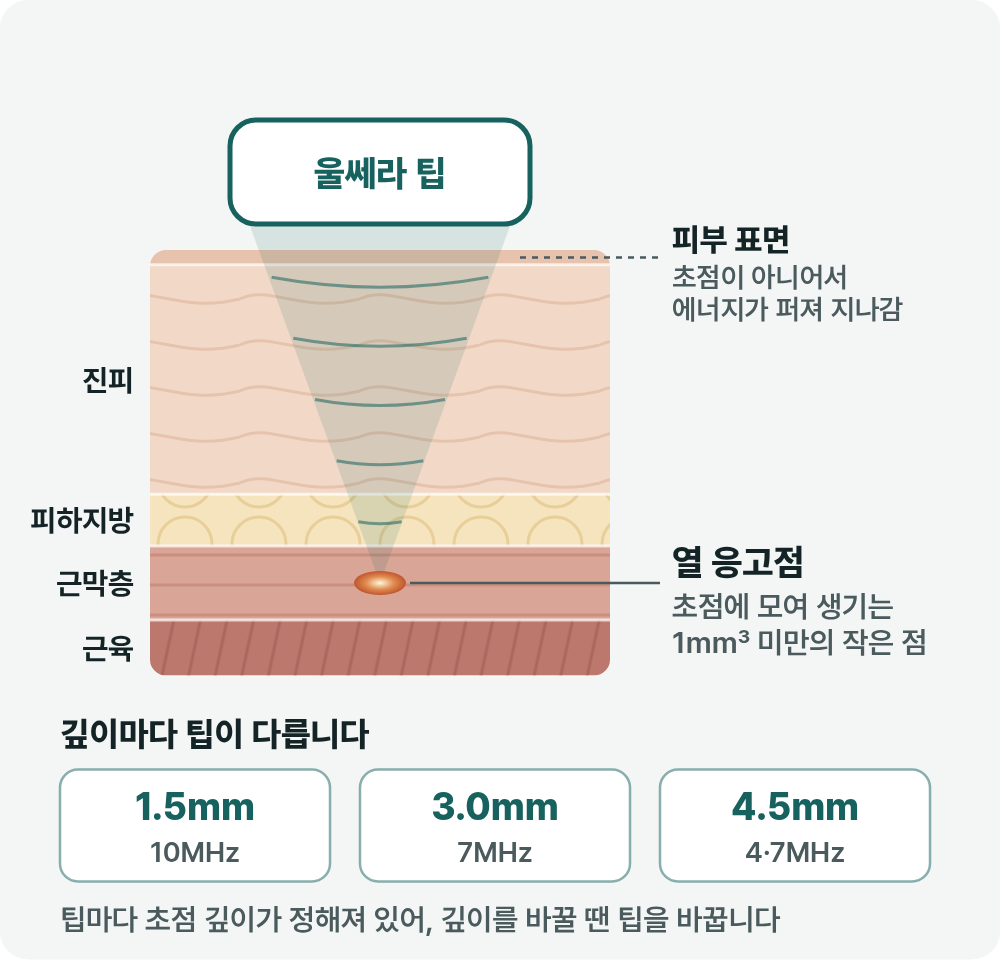
1.5mm 3.0mm 4.5mm
With Ulthera Prime, each tip has a preset focal depth and frequency, so the tip is swapped when the depth needs to change during treatment. The 1.5mm and 3.0mm tips target the dermis, while the 4.5mm tip aims at the SMAS layer.
A row of connected points = 1 line
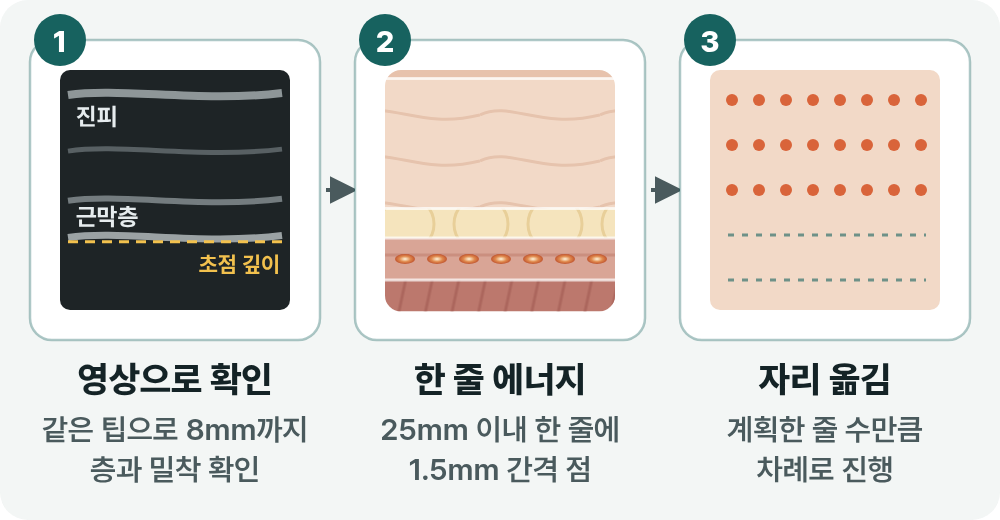
Thermal coagulation points are created in a single line at standard 1.5mm intervals (lines range from 5 to 25mm in length; a 25mm line contains 17 points). Tissue between the coagulation points is left intact, and the number of lines is planned for each area before treatment.
Check the layers before delivering energy
Skin thickness and layer depth vary from person to person, and even from area to area within the same face. Ulthera Prime uses the same tip that delivers the energy to first view the 0–8mm depth beneath the skin through ultrasound imaging. It then checks whether the tip is making proper contact with the skin and confirms the depth of the target layer before delivering energy.

Thermage heats the dermis over a broad area with radiofrequency.
Thermage is a monopolar device that uses 6.78MHz radiofrequency (RF). When RF current flows between the tip placed on the skin and a return pad attached to the body, heat is generated by the electrical resistance of the tissue.
Unlike Ulthera, Thermage does not focus energy onto a single point. Instead, it heats a broad volume of tissue beneath the tip area. The heat is concentrated mainly in the dermis, and it can extend to the fibrous septa within the subcutaneous fat.
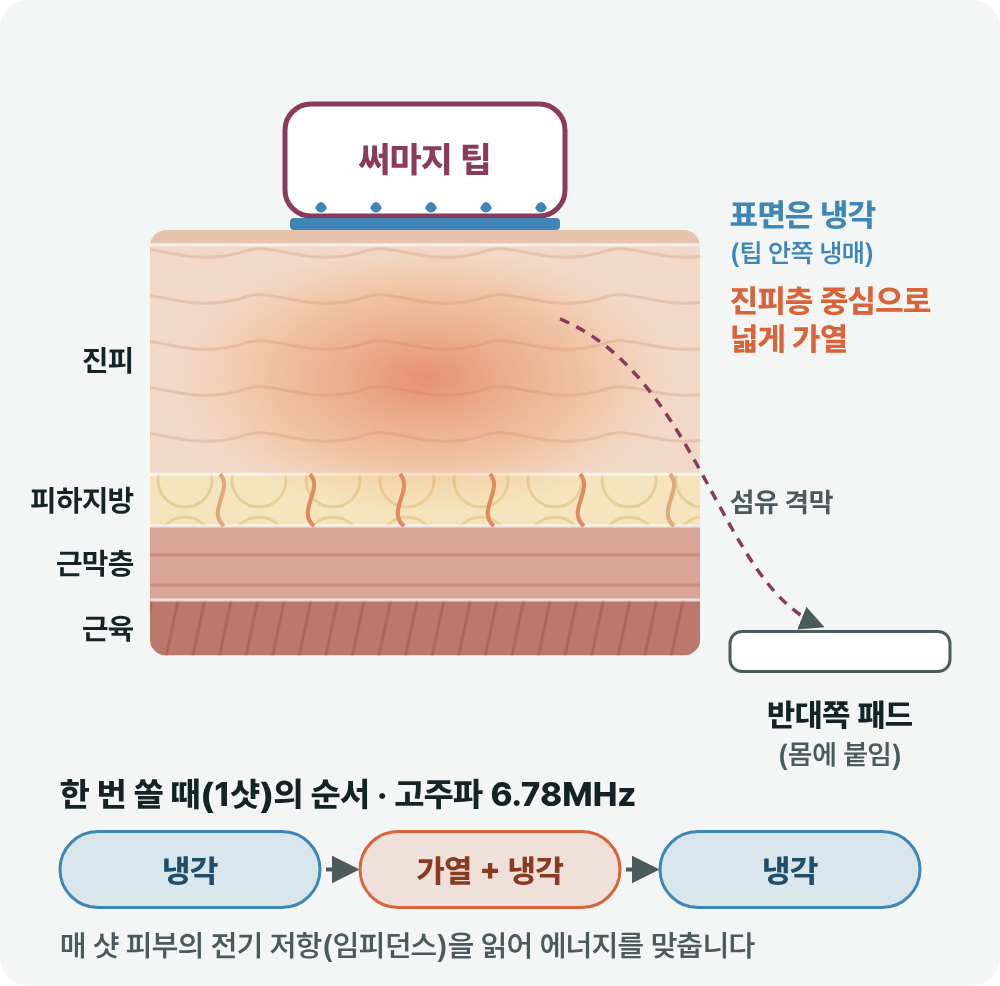
Cool the surface, heat what lies beneath
A coolant is sprayed from inside the tip to cool the skin surface. Cooling continues before, during, and after RF delivery. The coolant does not come into direct contact with the skin.
Adjusted by reading skin resistance with every shot
Skin electrical resistance (impedance) varies by area and by person. Thermage FLX reads skin resistance on each shot and adjusts the energy output accordingly. Tips come in different sizes, including a 4.0cm² tip for the entire face and a 0.25cm² tip for the eye area.
Common ground: heat and collagen
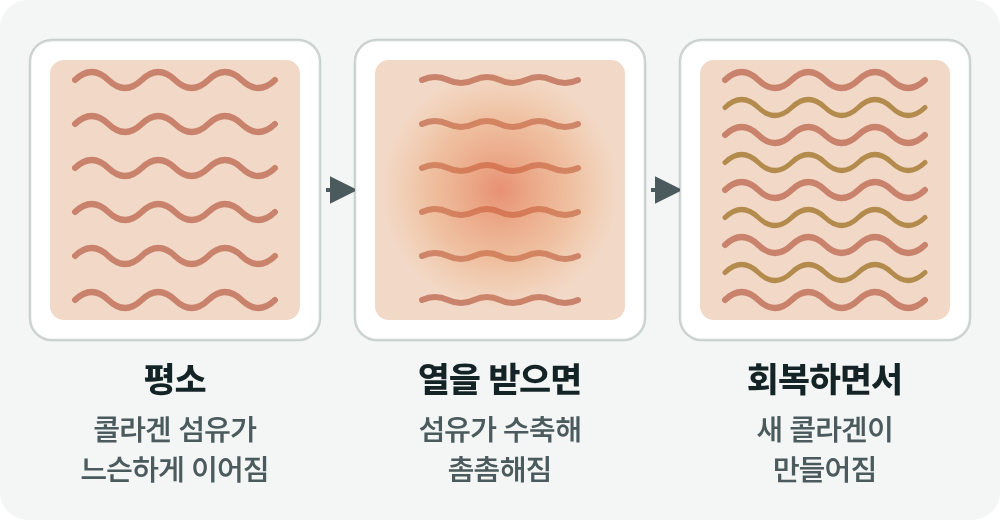
Although the types of energy differ, both devices work by using heat to alter collagen in the tissue. Collagen is known to contract as its structure changes at around 65°C, and new collagen is said to form during the recovery process from these small thermal injuries. This is why the tightening felt right after treatment differs from the changes that can develop over several months.
Ulthera vs. Thermage at a glance
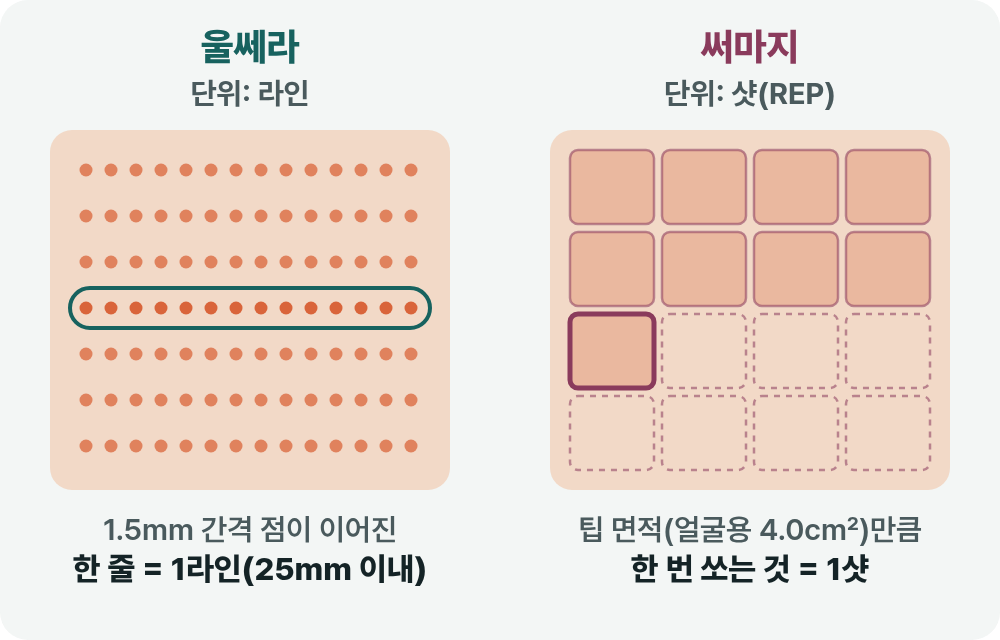
Ulthera and Thermage differ in the type of energy they use and the range they reach. Depending on skin condition, one treatment may be chosen, or both may be planned together. To determine what your skin needs, it is important to accurately assess the depth where sagging begins and your skin thickness.
Have a question? Message us on Naver TalkTalk!

















Frequently Asked Questions
What does Busan Ulthera-Thermage mean?
Busan Ulthera-Thermage refers to a combined lifting treatment using Ulthera and Thermage. Both devices are described as popular choices for concerns about sagging and fine lines.
How does Ulthera work?
Ulthera focuses ultrasound onto a single point beneath the skin and heats tissue only at that spot. Each tip has a set focal depth, so the tip is changed when the depth needs to be adjusted.
How does Thermage generate heat?
Thermage is a monopolar device that uses 6.78MHz radiofrequency. When RF current flows between the tip placed on the skin and a return pad attached to the body, heat is generated by the electrical resistance of the tissue.
How does Thermage cool the skin surface?
A coolant sprayed from inside the tip cools the skin surface. Cooling continues before, during, and after RF delivery, and the coolant does not touch the skin directly.
How do you choose between Ulthera and Thermage?
Depending on skin condition, one device may be used alone, or both may be planned together. Deciding requires accurately assessing the depth where sagging begins and the thickness of the skin.
When do results appear after treatment?
Unlike the tightening felt right after treatment, results can develop over several months. For both devices, new collagen is known to form during the recovery from the small thermal injuries they create.